
The late-80s lead tone.
One cranked head into a 4×12, a plate behind it, a cream Strat with single coils and a scalloped neck: the neo-classical school, harmonic minor at speed, every note picked. The chain was captured with neural networks rather than modelled from a schematic, then checked against the reference recording until the two could not be told apart. The tone is the product; everything else on this page is the room around it.
- NEURAL CAPTUREThe head and every pedal are trained on the real thing, not approximated from a circuit.
- MEASURED CABThe 4×12 is an impulse response of the cabinet, the mic and the room, not a tone stack.
- ONE CHAINNot two hundred amps. One rig, captured obsessively, that sounds like the record.
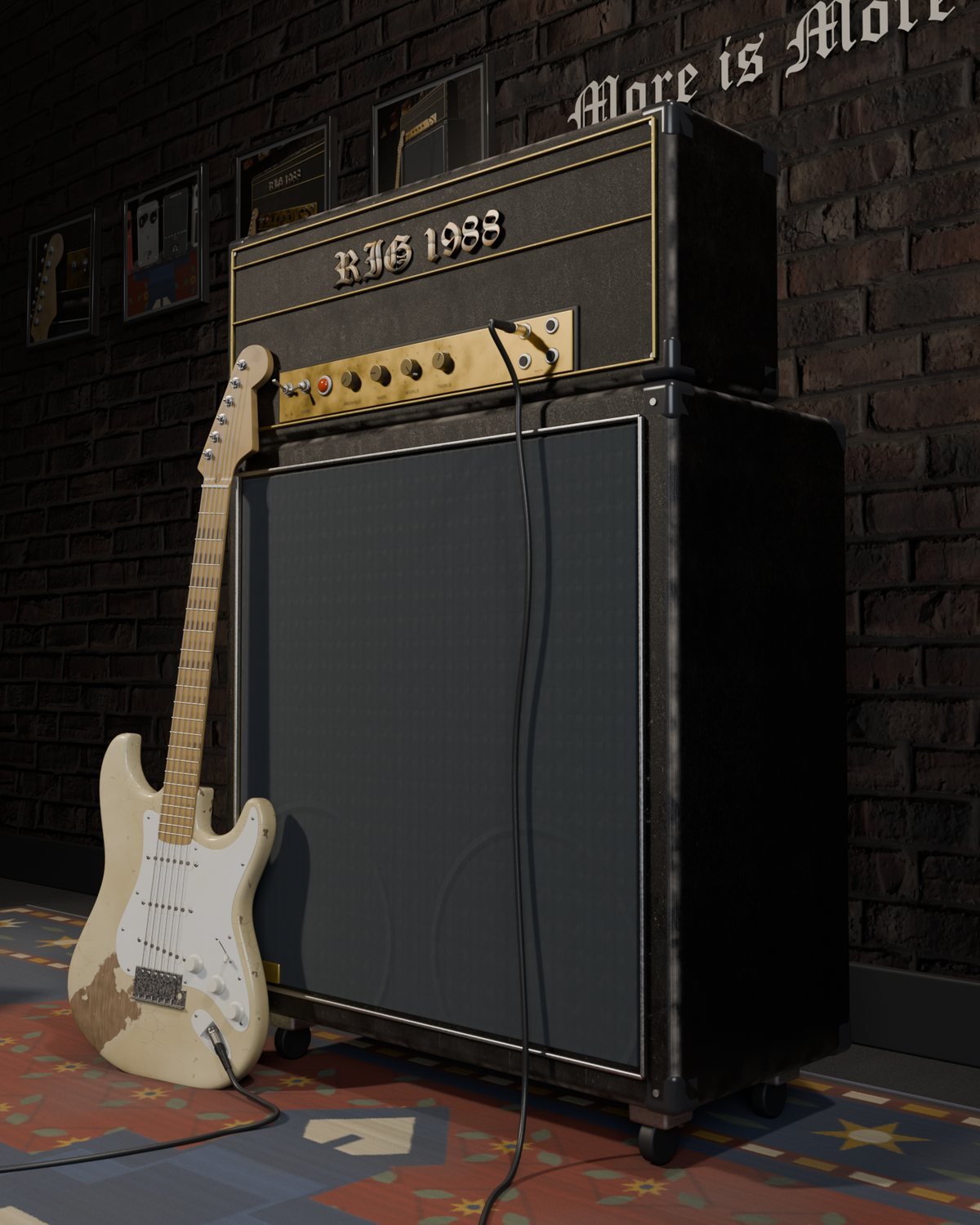 The stack, from the floor
Six pedals. One board.
The board is where the tone gets its edge: a gate to keep it clean between notes, a compressor so the arpeggios sit still, the drive that pushes the front of the amp, an EQ for the cut, a delay and a plate for the size. Each one is a capture of the pedal it looks like, and each one is on the floor in front of you.
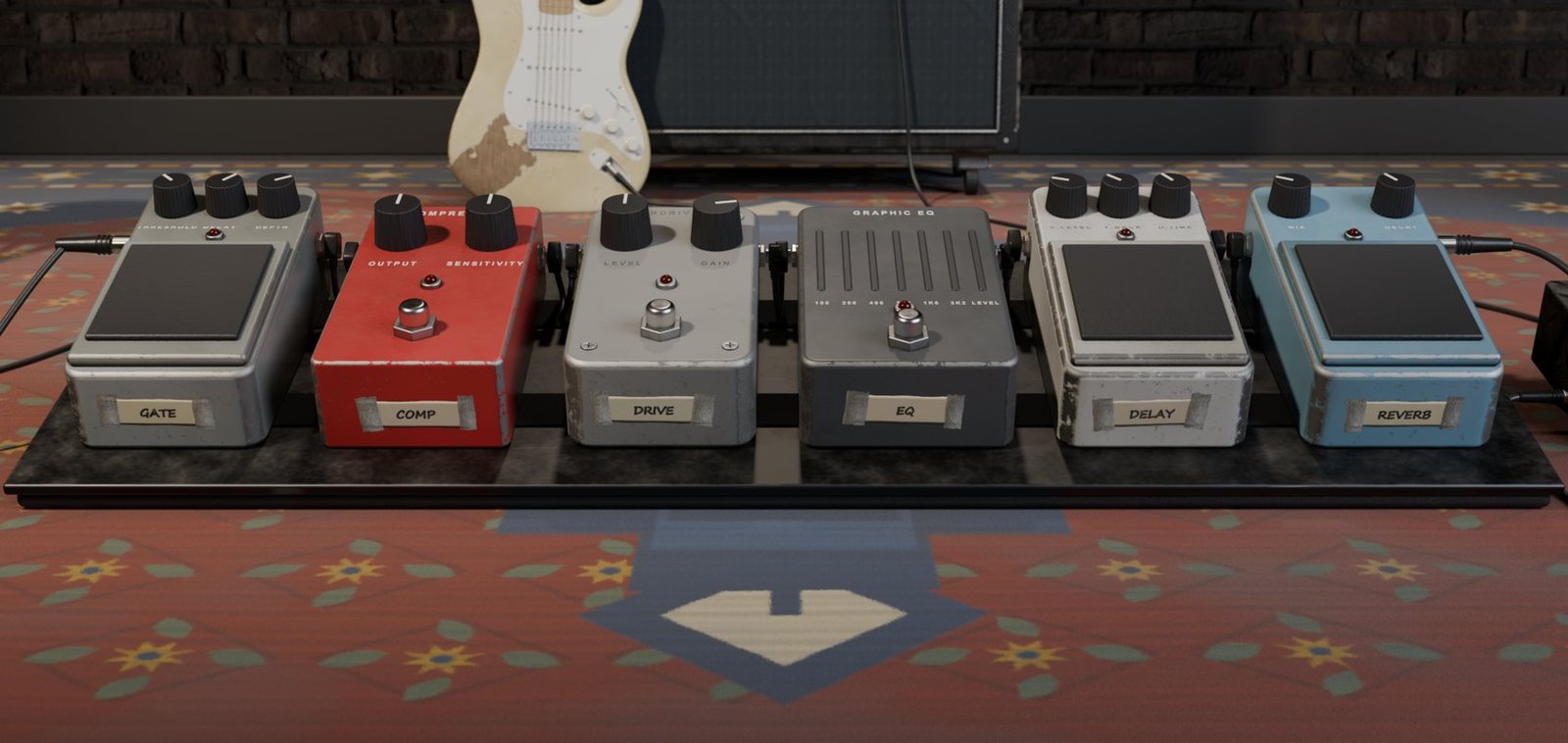
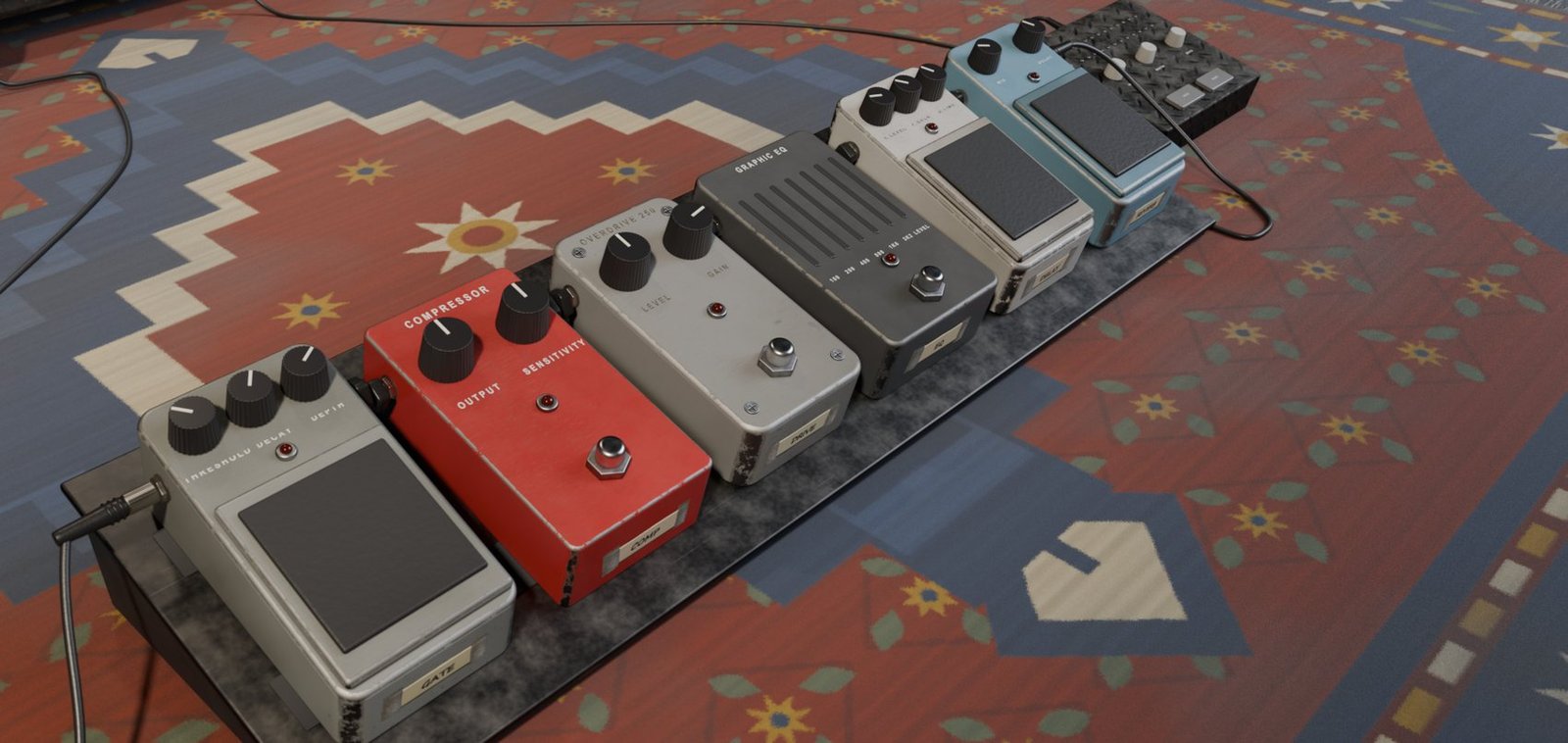 Gate · Comp · Drive · EQ · Delay · Reverb
A room, not a menu.
Everything sits where a real rig sits. Walk up to the board and a pedal fills the screen; step back and the whole room is there again. No panels, no tabs: the room is rendered, lit and unlit, and you are in it. Try the switch.
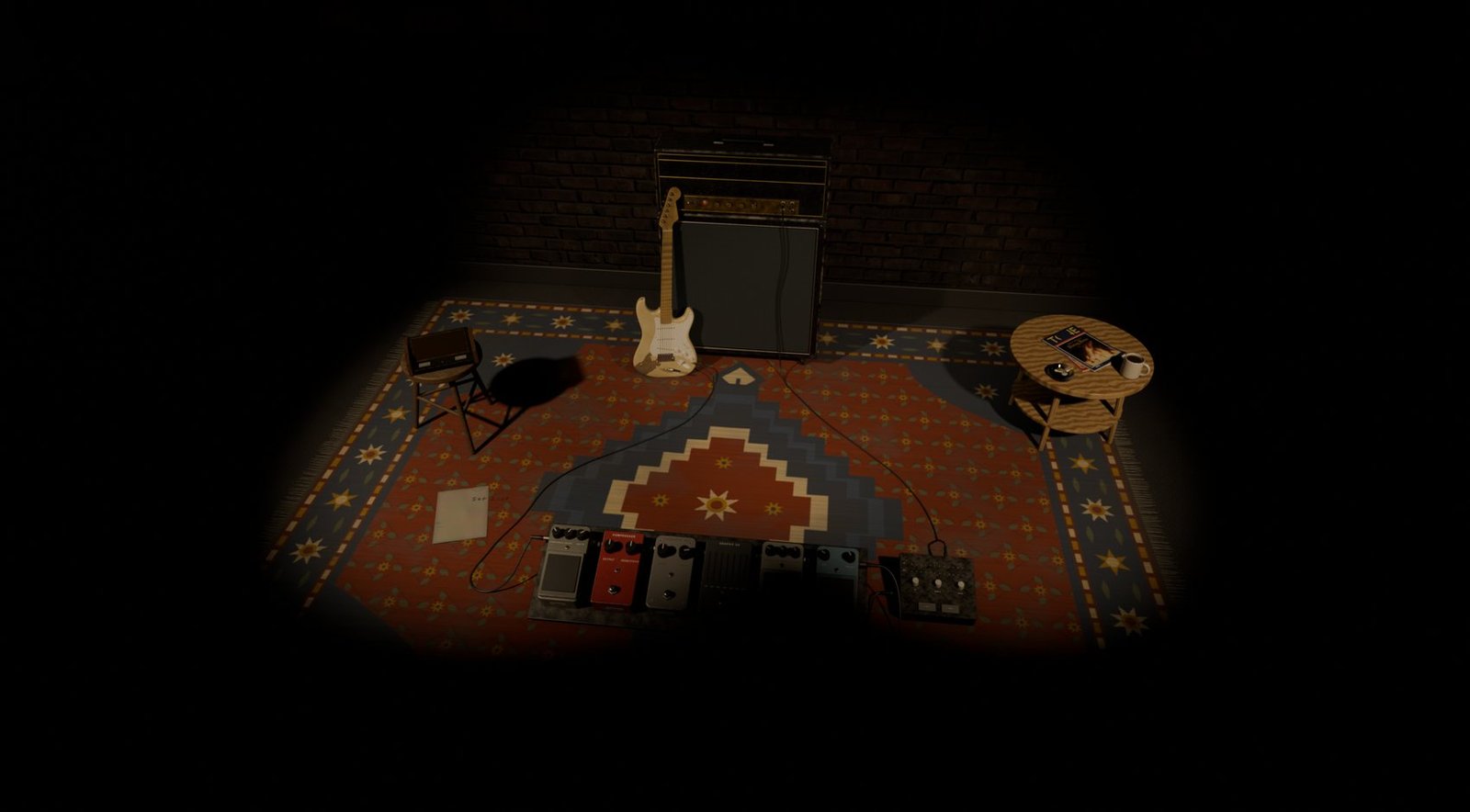
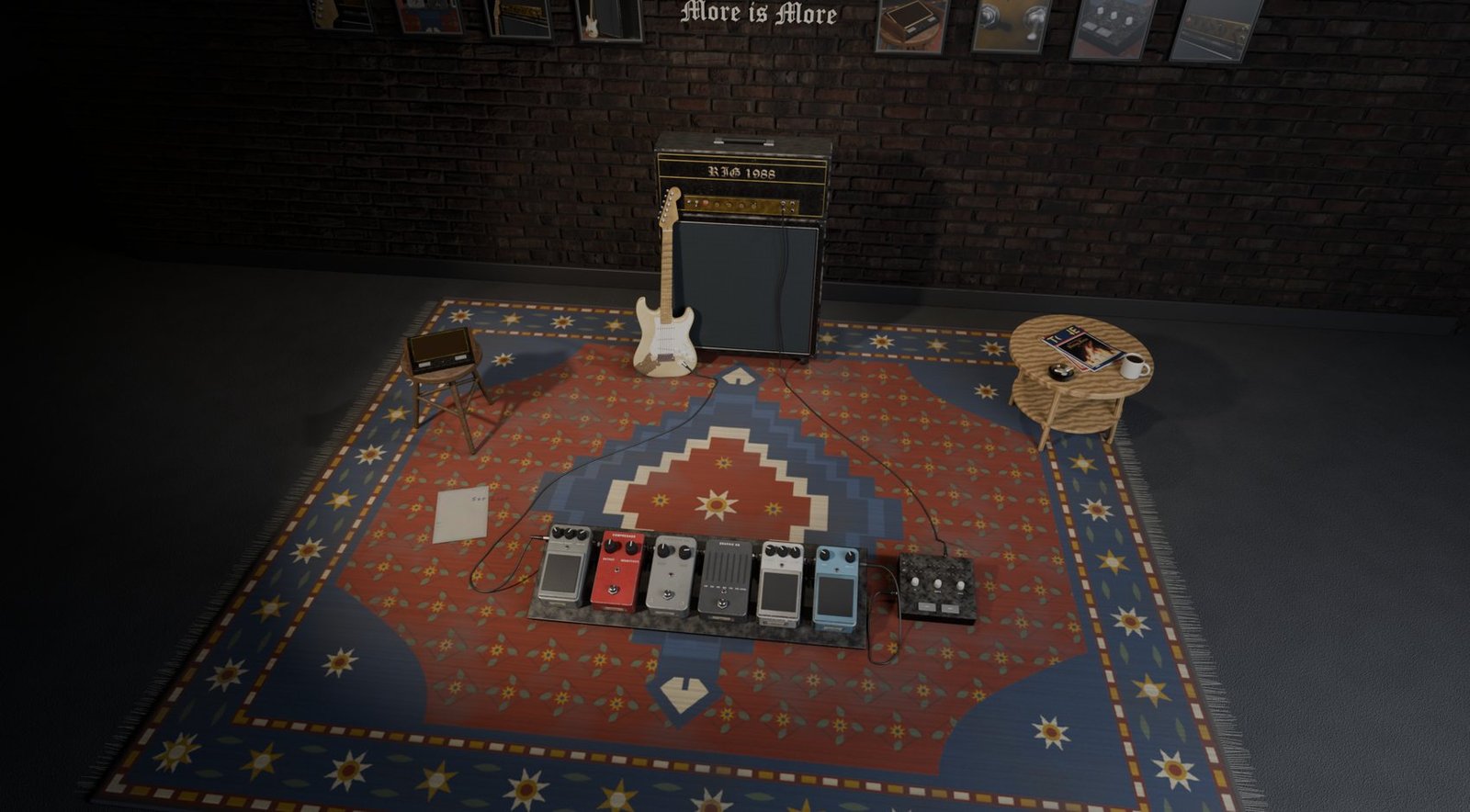 Lit · from the ceiling
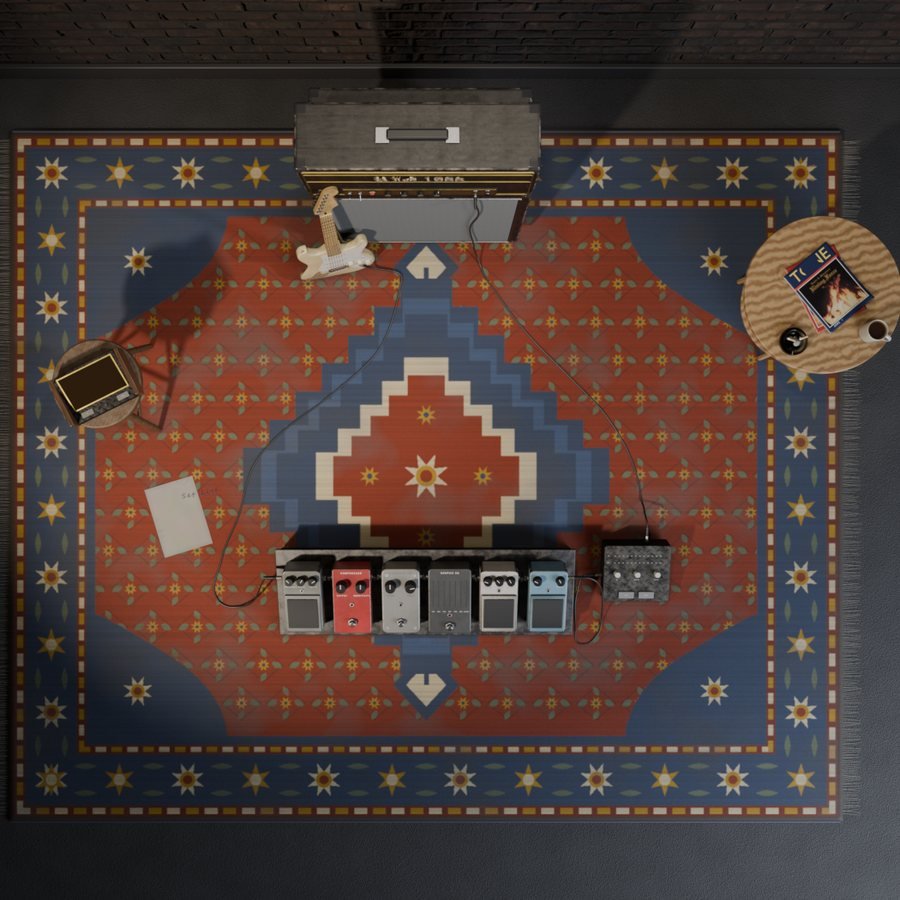 The floor plan
The feel. A rug, a stool, a coffee table with your presets on a sheet of paper. The lamps stay on when the amp is off. It is a place you practise in, not a window you configure.
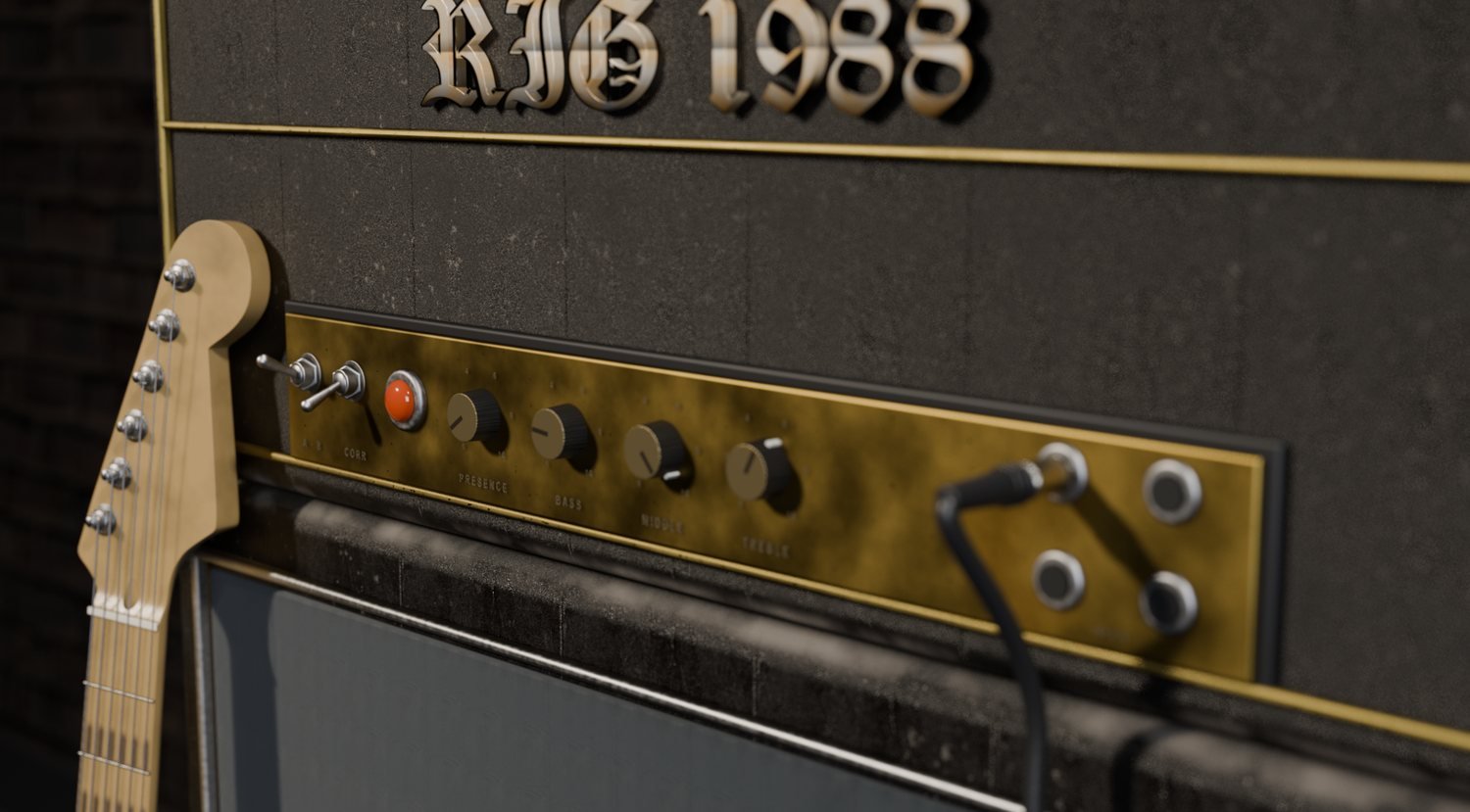
Head and 4×12.
Not a circuit simulation: a neural network trained on the real head until it plays like it, the sag when you dig in and the recovery when you stop. The cabinet is a measured impulse response of the 4×12. Five knobs and a jack, the whole front panel, and they do what they do on the real one. Touch them.
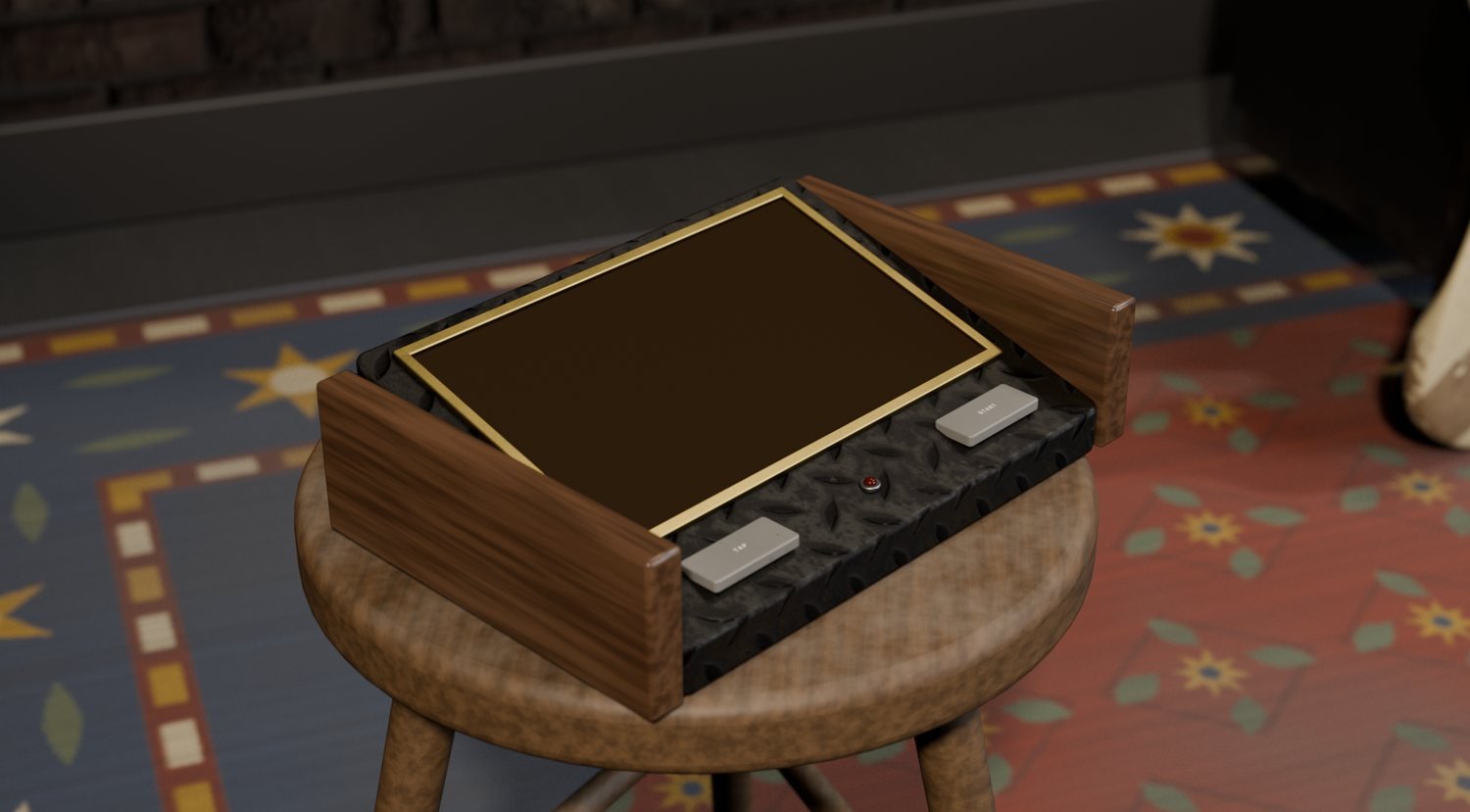
TEMPO RANGE & MODE
Learn to shred, in time.
Runs at speed come from runs done slowly, many times. The metronome on the stool does the discipline for you: set a range and it climbs, glides or throws tempos at random, holding each one as long as you tell it to. Sample-accurate, inside the audio engine, so the click lands on the beat and not near it. Watch it: that one is climbing from 120 to 160 in fives.
The engine.
The part you never look at, built so you never have to. High-quality tone is a set of numbers before it is a feeling.
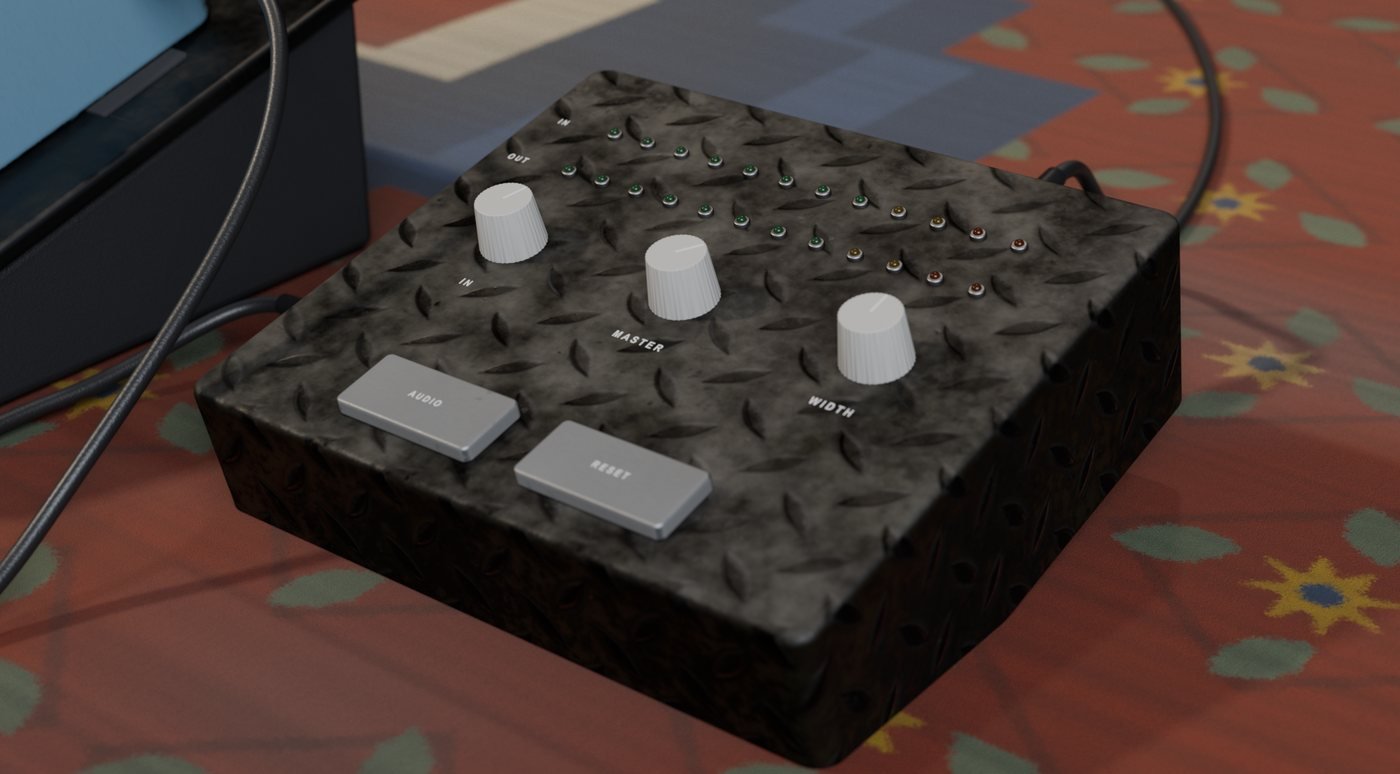 The meter box · in, master, width
Same room. VST3.
The plugin is the standalone, hosted: same renders, same engine, same room. Every knob is a parameter, so the drive rides an automation lane; the metronome locks to the session's bars. One licence covers both.
Updates, support, and a free week.
A rig is not finished when it ships. This one has somebody behind it.
Updates keep coming
New captures, fixes and features land as builds, and they will keep landing. The app tells you when one is out; a click downloads it. A licence includes a year of them, and the app keeps working after that.
Current build —Support that answers
Write and a person replies, usually the same day. Report a bug, ask how something works, ask for something that is not there yet. The fixes go into the next build, and the notes say so.
Write to support →Free trial, no card
Seven days of the full rig, standalone and plugin. Your email address is the account; there is no form and nothing to cancel. If it is not the tone, it costs nothing.
Download the trial →- Two machines, release one any time
- A year of updates, then it keeps working
- Works offline for 14 days between check-ins
- 7-day free trial first, no card
One rig, one price.
Honest about what this is
One chain, captured obsessively. If you want two hundred amps, this is the wrong app.
You need an audio interface with an ASIO driver. The app takes it exclusively while it runs — that is how the latency stays low.
Windows only, for now. Pay by PayPal; the licence is issued in your name when the payment is confirmed, usually within the day.